Working to Lower Housing Costs and Expand Opportunity

Housing affordability is one of the top concerns I hear from families across the Lehigh Valley and the Poconos. In the years immediately following the covid pandemic, prices for homes and apartments soared nationwide. That’s why I’ve focused on practical solutions that increase housing supply, lower costs, and help more families achieve stability and homeownership.
This work includes:
- Securing federal funding to support major local housing and redevelopment projects
- Voting for tax relief and housing provisions that help drive the construction of more affordable homes
- Introducing legislation to make homeownership more attainable for working families
- Supporting additional reforms that cut red tape, expand financing tools, and lower the cost of building housing
I recently helped secure $3.7 million for a major redevelopment project in Catasauqua that will transform vacant riverfront land into a new mixed-use development with more than 300 apartments and dozens of townhomes. This investment supports critical site work and helps move forward a long-planned effort to revitalize the area and expand housing in the Lehigh Valley.
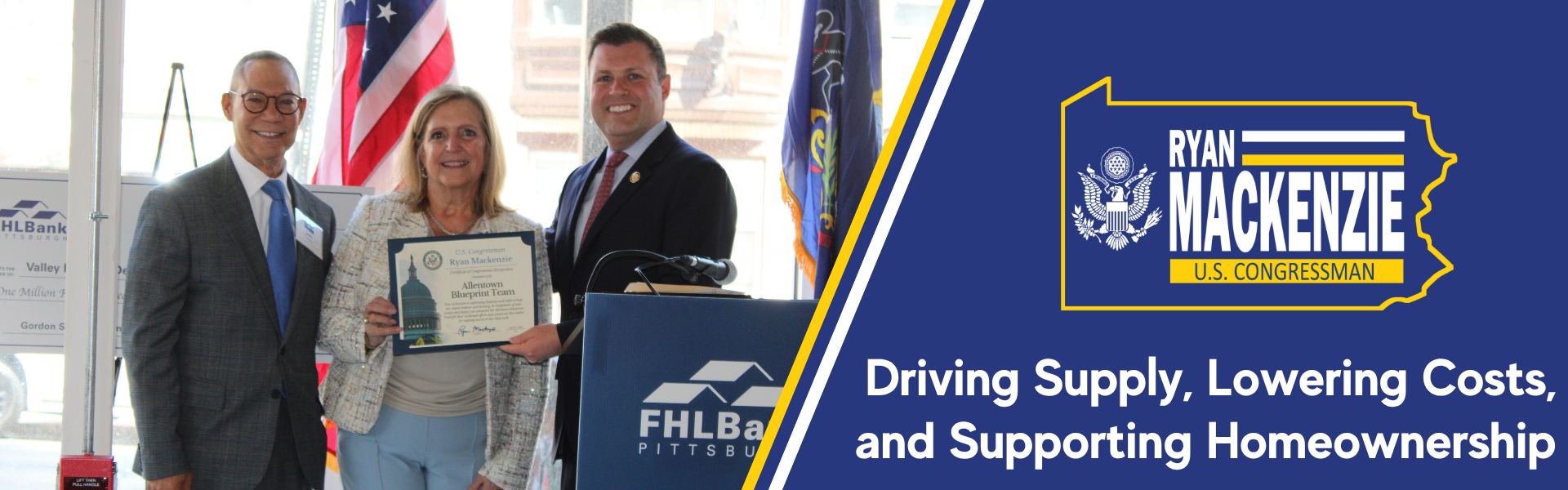
- Driving Supply, Lowering Costs, and Supporting Howeownership
-
Image
I don’t have to tell you that housing costs have risen out of control in parts of the Lehigh Valley. In Allentown, rent prices rose 45% from 2019-2024. In Bethlehem, prices rose 40% from 2019-2023. For many families in our community, these costs are making life more difficult.
We can do better. That’s why I voted to pass the Working Families Tax Cuts, which expands the Low-Income Housing Tax Credit—a key tool used to finance affordable housing developments. These reforms are expected to help support the construction of more than one million new affordable housing units — increasing supply and helping ease cost pressures for families.
I also helped enact the 21st Century ROAD to Housing Act, landmark bipartisan housing legislation designed to tackle America’s estimated 5.5 million-home shortage. The law cuts unnecessary regulatory barriers that slow new construction, modernizes federal housing programs, expands financing options for builders and communities, and helps families compete for homes instead of being crowded out by large institutional investors. Together, these reforms will help increase the supply of single-family homes, apartments, and other affordable housing while expanding pathways to homeownership.
> Learn More <
I am also a co-lead of the Make American Housing Affordable Act, which creates a targeted tax credit to help Americans purchase their primary home. Eligible individuals could receive up to $5,000, and joint filers up to $10,000, helping reduce the upfront cost of buying a home and making homeownership more attainable for middle-class families.
In addition, I've supported a range of reforms to expand housing opportunities, increase supply, reduce costs, and make homeownership more attainable, including:
- Strengthening tax incentives that help finance affordable housing
- Expanding financing tools and modernizing outdated federal requirements
- Streamlining rules to make it easier and faster to build housing
- Rolling back mandates that increase construction and homeownership costs
- Expanding pathways to homeownership for first responders, teachers, firefighters, EMTs, and paramedics